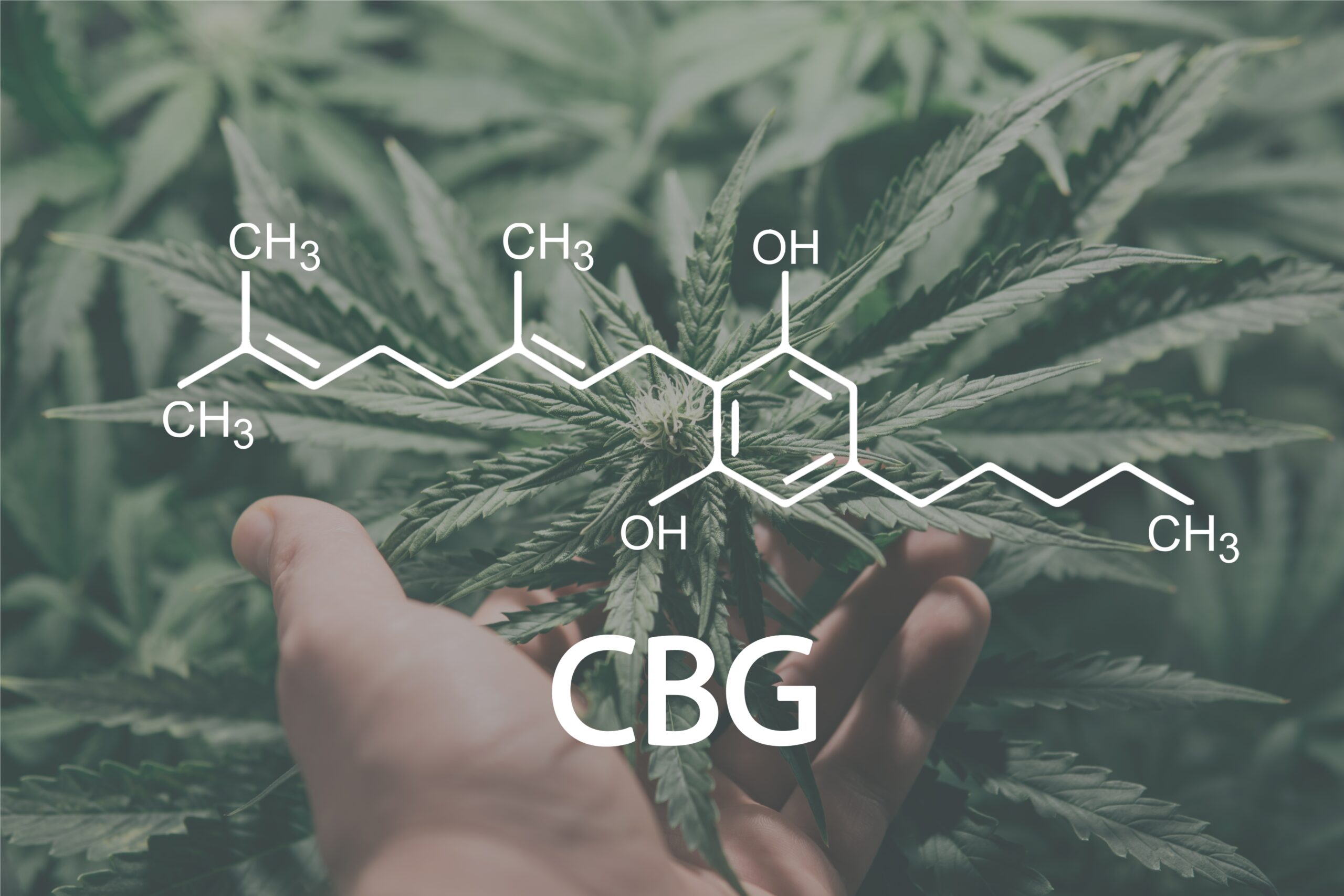
A quiet milestone for the “mother of all cannabinoids”
Cannabigerol, better known as CBG, has been called the “mother cannabinoid” for a good reason. It is the chemical precursor from which the hemp plant produces most other cannabinoids, including CBD and THC. As the plant matures, enzymes convert CBG into these compounds, which is why mature hemp typically contains only small amounts of it. Growers who want higher concentrations have to harvest early or cultivate specific chemotypes — which is part of the reason why CBG products tend to be more expensive than CBD.
Until recently, though, almost everything we thought we knew about CBG’s effects on people came from either preclinical research (cell and animal studies) or the accumulated experience of users who described feeling calmer, more focused, and in a better mood after taking it. The human clinical data simply wasn’t there.
That has now changed.
What the 2024 study actually showed
In July 2024, researchers from Washington State University, UCLA, and CReDO Science published the first-ever human clinical trial on CBG in Nature’s Scientific Reports. The paper, titled “Acute effects of cannabigerol on anxiety, stress, and mood: a double-blind, placebo-controlled, crossover, field trial,” was led by Dr. Carrie Cuttler, with cannabinoid pioneer Dr. Ethan Russo among the co-authors.
Thirty-four healthy adults each participated in two sessions, one week apart. In each session they received either 20 mg of hemp-derived CBG in a tincture or a placebo — neither the participants nor the researchers knew which was which until the study was unblinded. Participants then completed a series of assessments, including the Trier Social Stress Test (a well-validated laboratory stressor), a verbal memory test, and an app-based impairment assessment.
The results were clear:
- CBG significantly reduced anxiety compared to placebo.
- CBG significantly reduced stress compared to placebo.
- CBG enhanced verbal memory — an unexpected and welcome finding.
- No intoxication. No impairment. Participants did not feel “high,” and their motor and cognitive function were not impaired in any measurable way.
It is the first time a randomised, placebo-controlled human trial has shown what many CBG users have been reporting for years.
Why CBG may lift mood: the serotonin connection
The anxiety and mood results will not surprise anyone familiar with the pharmacology of CBG. Earlier research has shown that CBG acts as an alpha-2 adrenoceptor agonist and has activity at 5-HT1A serotonin receptors — the same family of receptors targeted by several prescription anxiolytics and antidepressants.
The 5-HT1A receptor, in particular, is deeply involved in mood regulation. Medications that activate it tend to have anxiolytic and antidepressant effects. CBG appears to do something similar, but through a plant-derived molecule that the body’s endocannabinoid system is already equipped to interact with.
This helps explain a trend we have been seeing: more and more people are choosing high-quality, extract-based CBG products specifically for their reported mood-enhancing effects. Customers describe a kind of calm alertness — less worry, a lighter mood, and a clearer head — which fits very neatly with what you would expect from a compound that modulates serotonin signalling without causing intoxication.
Why “extract-based” and “high quality” matter
One point worth underlining: the study used a hemp-derived CBG tincture, not an isolate synthesised in a lab. This matters.
A real hemp extract contains not only the target cannabinoid but also a supporting cast of terpenes, flavonoids, plant waxes, and trace cannabinoids. These work together through what researchers call the entourage effect — the observation that whole-plant extracts often produce stronger and more balanced effects than isolated compounds at the same dose. In seizure research, for example, botanical CBD has repeatedly shown comparable results to pharmaceutical isolates at a fraction of the dose, and without the elevated liver enzymes seen with purified forms.
For CBG specifically, this has practical consequences. When people ask us why an extract-based CBG product feels noticeably different from a cheap CBG isolate, the answer is almost always the same: it is the full botanical matrix doing its job. For something as delicate as mood and stress regulation, that matters.
That is why we keep coming back to the same three criteria when we talk about CBG products: they should be hemp-derived, extract-based, and laboratory-verified for purity and potency. Anything less and you are not really comparing the same thing the researchers tested.
What this means in practice
A few takeaways from the Cuttler study that are worth holding onto:
20 mg is a meaningful dose. This was not a mega-dose or a micro-dose — it was a single, measured serving that produced real, measurable effects. For people who have been experimenting with CBG, this is a useful reference point.
Effects appeared acutely. Participants felt the difference in the same session, not after weeks of daily use. That does not mean daily use is pointless — it may well provide additional benefits — but CBG seems to work on a relatively fast timescale for anxiety and stress.
No “high,” no impairment. This makes CBG highly relevant for people who want the mood and stress benefits of a cannabinoid during their working day, before a meeting, before a social event, or simply as part of a daily wellness routine, without any of the side effects associated with THC.
Memory improved, not declined. This is particularly interesting because it flips a common stereotype about cannabinoids on its head. CBG, at least in this study, actually helped people remember more words
Science catching up with experience
Cannabinoid science has a habit of catching up with what users have been saying for years. CBD for epilepsy. CBD for burnout in healthcare workers. CBN for sleep. And now CBG for anxiety, stress, and mood.
That user experience is exactly what the study echoes. Darren Morrison, a security guard trainer based in London, UK, describes it this way:
“Using Premium CBG definitely enhanced my mood, creating a sense of well-being and positive mental attitude and focus.”
Darren works with classrooms full of trainees, each with different personalities and learning needs — the kind of sustained interpersonal focus that can quietly wear a person down over a day. He puts it simply: “I believe these products help your body maintain homeostasis. You can then deal with other people’s issues more effectively.” That description — balance, focus, and an uplifting mood in the classroom — is the real-world version of what the Cuttler team measured in the lab.
Plenty remains unknown, and more trials are underway. But the direction is clear: CBG is earning its place as a serious wellness cannabinoid.
If you have been curious about CBG, or if you have been using it and wondered whether the research would ever catch up, the answer is that it is starting to.
Read the full study on our research page: hempforhumanity.eu/research
Direct link to the study: Acute effects of cannabigerol on anxiety, stress, and mood — PubMed
This article is for informational purposes only and does not constitute medical advice. CBG is not a treatment for any diagnosed condition. If you are considering adding CBG or any other cannabinoid to your routine — especially if you are pregnant, nursing, or taking prescription medication — please speak with a qualified healthcare professional first.
Follow Hemp for Humanity on Telegram: https://t.me/hempforhumanityofficial
Recent Comments