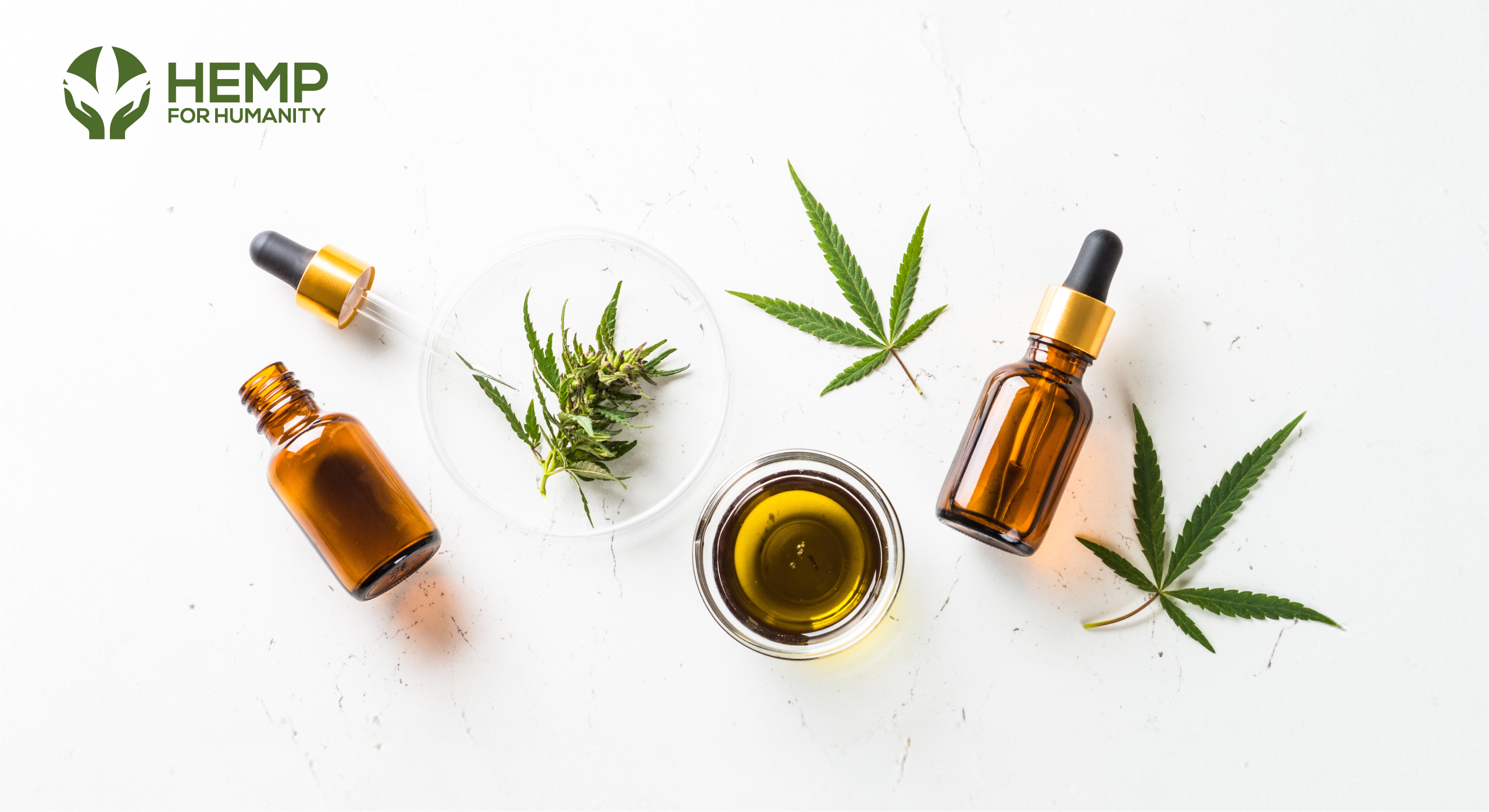
For many people, the word “hemp” immediately brings one compound to mind: CBD. CBD, or cannabidiol, has become the best-known non-intoxicating cannabinoid in the hemp plant. It has helped open the door to broader public interest in hemp wellness, the endocannabinoid system, and plant-based support for balance. But CBD is only one part of a much larger botanical story. Hemp naturally contains a wide range of compounds, including cannabinoids, cannabinoid acids, terpenes, flavonoids, fatty acids, and other plant constituents. Some occur in larger amounts, while others appear only in small concentrations. Yet even these smaller components can matter because the hemp plant is not a single-compound ingredient. It is a complex plant matrix.
This is why not all hemp products are the same. And it is why education matters. When people understand the difference between CBD, CBG, CBN, CBC, CBD-A, terpenes, broad-spectrum formulations, and isolates, they are better equipped to choose products that match their personal wellness goals. The goal is not simply to buy more. The goal is to choose smarter.
CBD is one of the main cannabinoids found in hemp. It is non-intoxicating, meaning it does not produce the “high” associated with THC. CBD is often discussed in relation to the endocannabinoid system, a regulatory network involved in maintaining balance in the body. In hemp products, CBD is often used as a foundation cannabinoid because it is well studied and widely recognized. However, CBD does not exist in isolation inside the plant. In natural hemp, it is part of a wider spectrum of compounds. This distinction is important because a purified CBD isolate and a broad-spectrum hemp extract are not the same thing. An isolate is a product that contains one purified compound, such as CBD alone. Broad-spectrum hemp extract, by contrast, is designed to retain multiple naturally occurring hemp compounds, while typically removing THC to non-detectable or legally compliant levels depending on the product and market. Both formats have a place. But they are different tools.
Before CBD exists in its neutral form, the hemp plant produces CBD-A, or cannabidiolic acid. CBD-A is the acidic precursor to CBD. When hemp is heated, dried, or processed, CBD-A can convert into CBD through a process called decarboxylation. This is one reason raw hemp extract can be interesting. It may contain cannabinoid acids that are closer to the form found in the living plant. CBD-A is not simply “unfinished CBD.” It is a naturally occurring hemp compound in its own right. Research into cannabinoid acids is still developing, but their presence helps illustrate why plant diversity matters. A raw or less heavily processed hemp extract may offer a different cannabinoid profile from a product made only with purified CBD.
CBG, or cannabigerol, is often called a “parent” or “mother” cannabinoid because its acidic precursor, CBGA, is a key starting point in the plant’s cannabinoid pathway. CBGA can be converted by plant enzymes into other acidic cannabinoids, including CBDA, THCA, and CBCA. CBG itself forms when CBGA is decarboxylated. Reviews of cannabinoid biosynthesis describe CBGA as a primary precursor in the cannabinoid pathway. CBG is usually present in smaller amounts than CBD in mature hemp plants, although modern cultivation and extraction methods have made CBG-rich products more available. From a wellness education perspective, CBG is valuable because it helps people understand that cannabinoids are not interchangeable. CBD and CBG may both be non-intoxicating cannabinoids, but they are not identical compounds. They have different chemical structures and may interact with biological systems differently. This is where smart product selection becomes important. Some products are built around CBD. Others include CBG as part of a broader formulation. Some may be designed for general daily balance, while others may be positioned for more targeted wellness support.
CBN, or cannabinol, is another cannabinoid that has gained attention, especially in nighttime wellness products. CBN is often associated with the natural aging or oxidation of THC. In other words, it is not usually produced in large amounts by fresh hemp plants in the same way CBD or CBGA are produced. Instead, it can form as cannabinoids change over time through exposure to oxygen, heat, or light. Because of its reputation in evening formulations, many people associate CBN with sleep-related products. However, it is important to communicate carefully. CBN should not be presented as a guaranteed sleep solution or medical treatment. A more compliant way to explain it is that CBN is a hemp-derived cannabinoid commonly included in formulations designed to support evening routines and relaxation.
CBC, or cannabichromene, is one of the lesser-known cannabinoids, but it is still part of the plant diversity conversation. Like CBD, CBC has an acidic precursor: CBCA. It comes from the same broad biosynthetic family that begins with CBGA. CBC is not usually the headline cannabinoid in most consumer products, but its presence in broad-spectrum hemp extract contributes to the overall profile of the plant.
This matters because hemp education should not only focus on the most famous compounds. Minor cannabinoids may appear in smaller amounts, but they help create the unique fingerprint of a hemp extract.
Terpenes are not cannabinoids, but they are an important part of the hemp plant. They are aromatic compounds found in many plants, not only hemp. Terpenes are responsible for many of the natural scents found in herbs, fruits, flowers, and trees. For example, citrus fruits, lavender, pine, and rosemary all contain terpenes. In hemp, terpenes help shape the aroma and character of the plant extract. They may also contribute to the way a formulation feels or functions, especially when combined with cannabinoids. This is one of the reasons terpene preservation is often discussed in relation to full-spectrum and broad-spectrum extracts. Terpenes remind us that hemp is not just a cannabinoid source. It is a botanical system.
The difference between broad-spectrum extracts and isolates is central to understanding hemp product quality. A CBD isolate contains CBD and only CBD. This may be useful when a very specific single-compound format is desired. A broad-spectrum hemp extract contains CBD plus other naturally occurring hemp compounds, such as minor cannabinoids and terpenes, while avoiding intoxicating THC. This broader profile is often chosen by people who want the benefit of plant diversity without THC.
This brings us to the “entourage effect.” The entourage effect is the idea that cannabinoids, terpenes, and other plant compounds may work better together than isolated compounds alone. The concept has been discussed in the scientific literature, including research exploring potential synergy between phytocannabinoids and terpenoids. However, it is important to be precise. The entourage effect is a scientifically discussed concept, not a license to make exaggerated claims. It does not mean every broad-spectrum product is automatically better for every person. It means plant compounds may interact in meaningful ways, and formulation matters.
One useful example comes from epilepsy research, where purified CBD has been studied as a prescription medicine. Epidiolex is an FDA-approved oral solution containing purified cannabidiol. Its label lists common adverse reactions, including sleepiness, decreased appetite, diarrhea, elevated liver enzymes, fatigue, rash, sleep issues, and infections in certain patient groups. A 2018 review in Frontiers in Neurology compared reports involving purified CBD with CBD-rich cannabis extracts in refractory epilepsy populations. The authors found that CBD-rich extracts appeared to be associated with lower average CBD doses and fewer reports of adverse effects than purified CBD in the included studies, while noting that this may relate to synergy among plant compounds and that controlled clinical studies are still needed to confirm the explanation. This does not mean hemp products should be used to treat epilepsy. Epidiolex is a prescription medicine used under medical supervision. But the comparison does illustrate an important principle: formulation matters. A single purified compound and a plant-rich extract can behave differently.
The main lesson is simple: not all cannabinoids are the same, and not all hemp products are designed for the same purpose. CBD may be the most familiar. CBG may add a different dimension. CBD-A connects us to the raw plant. CBN is often used in evening formulations. CBC contributes to the minor cannabinoid profile. Terpenes add botanical complexity. Broad-spectrum extracts bring several of these compounds together. That is why education is so important.
When people understand the plant, they can make better choices. They can ask better questions. They can look beyond the front label and consider the formulation, quality, testing, cannabinoid profile, and intended use.
Hemp wellness is not about buying the strongest product or collecting the most bottles. It is about choosing the right product, using it consistently, and understanding why plant diversity matters. In the end, the value of hemp is not found in one cannabinoid alone. It is found in the intelligent combination of nature, science, quality, and education.
Written by Dr. Peter Verdegem, Phytonutrient Reseacher
This article is for educational purposes and does not constitute medical advice.
Follow Hemp for Humanity on Telegram: https://t.me/hempforhumanityofficial
Recent Comments